

Online writing in 2026 is no longer just blogging for fun or publishing random thoughts on the internet. It has evolved into a legitimate career path, a side income opportunity, and for many people, a full-time remote profession. If you are searching for an online writing guide for beginners, you are probably asking a deeper question: can I realistically start writing from home and turn it into something meaningful?
The short answer is yes, but not by guessing your way through it. This guide will walk you step by step through how to start writing online, what skills actually matter, how to choose your direction, and how to position yourself correctly from the beginning.
What Online Writing Really Means in 2026
Before jumping into tools and platforms, it helps to understand what “online writing” actually includes. Many beginners assume it only means blogging, but the digital writing landscape is much broader now.
Online writing can include blog posts, website content, email newsletters, SEO articles, product descriptions, social media scripts, technical documentation, ghostwriting, copywriting, and even AI-assisted editing. Some writers work independently, while others collaborate with startups, agencies, or digital creators.
When I talk about writing from home in 2026, I am not referring to a hobby. I am referring to a skill-based digital service that companies actively pay for.
Why Online Writing Is Still a Strong Opportunity
With AI tools becoming more common, some beginners assume writing is disappearing. In reality, the opposite is happening. Content demand continues to grow because businesses need human insight, structured thinking, and clarity. AI can assist, but it cannot replace strategic writing.
Companies need writers who can:
- Understand audience intent
- Structure content clearly
- Align writing with search engines
- Explain complex topics simply
- Add human perspective and authority
The opportunity is not shrinking. It is shifting toward writers who combine clarity with strategic thinking.
Step 1: Decide What Type of Writer You Want to Become
One mistake beginners make is trying to do everything at once. Instead of randomly applying for any writing task, define your direction early.
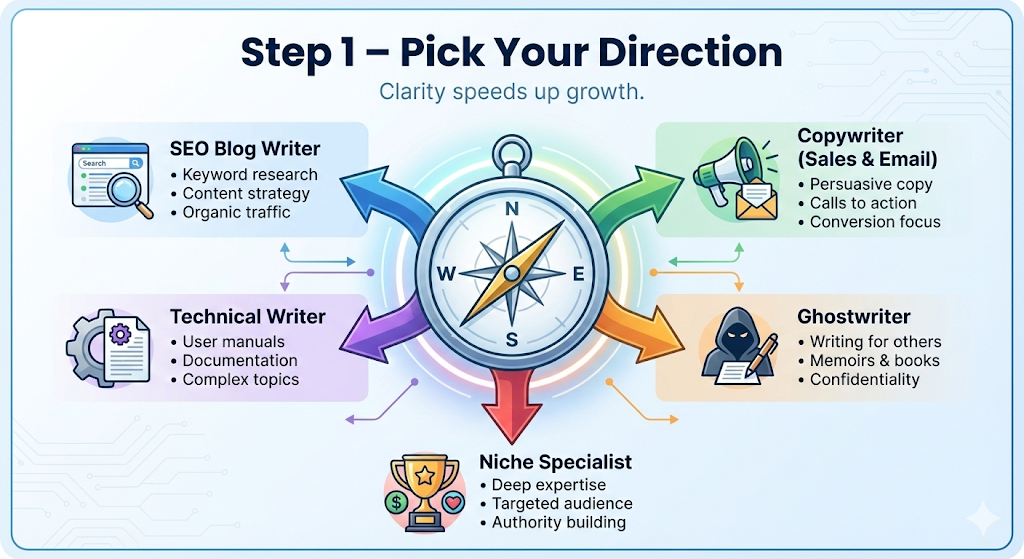
There are several common paths within online writing:
- Blog content writer focused on SEO-driven articles
- Copywriter who writes persuasive sales pages and emails
- Technical writer explaining complex products
- Freelance ghostwriter for founders and creators
- Niche specialist (finance, health, tech, gaming, etc.)
You do not need to choose a lifelong identity on day one, but you should choose a starting focus. Clarity speeds up growth.
Step 2: Build Foundational Writing Skills
You do not need a literature degree to start writing online, but you do need structured thinking. Strong online writing is not about fancy vocabulary. It is about clarity and usefulness.
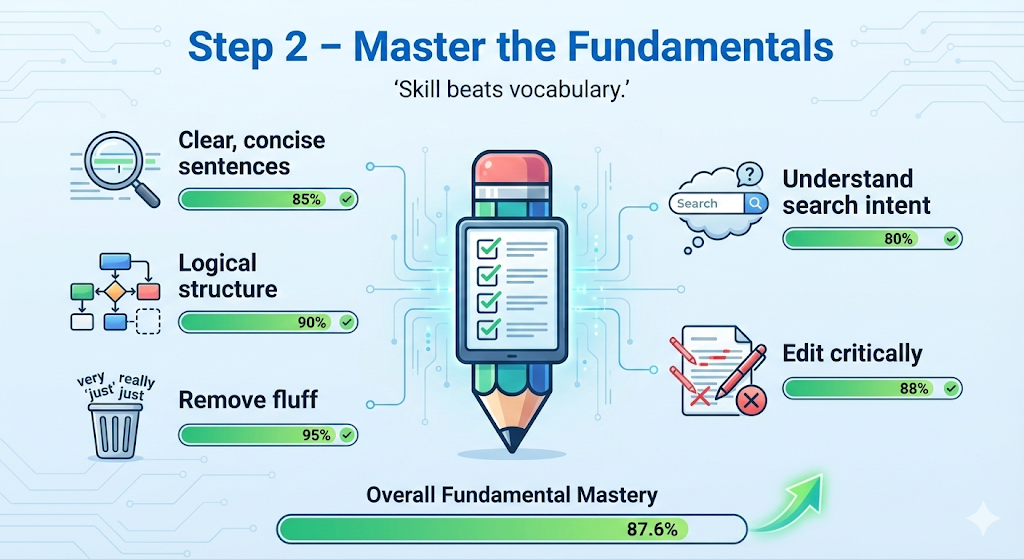
Foundational skills you should develop include:
- Writing clear and moderately sized sentences
- Structuring content with logical flow
- Avoiding fluff and filler language
- Understanding search intent
- Editing your own work critically
If you struggle with grammar or sentence flow, use writing tools for support, but do not rely on them blindly. Skill improvement must be intentional.
Step 3: Choose a Niche (Even If It Feels Early)
One of the most powerful moves you can make as a beginner is choosing a niche. When you specialize, you become easier to hire and easier to remember.
Instead of saying, “I am a writer,” you can say, “I write SEO blog content for SaaS companies” or “I help personal finance blogs rank on Google.” That positioning changes everything.
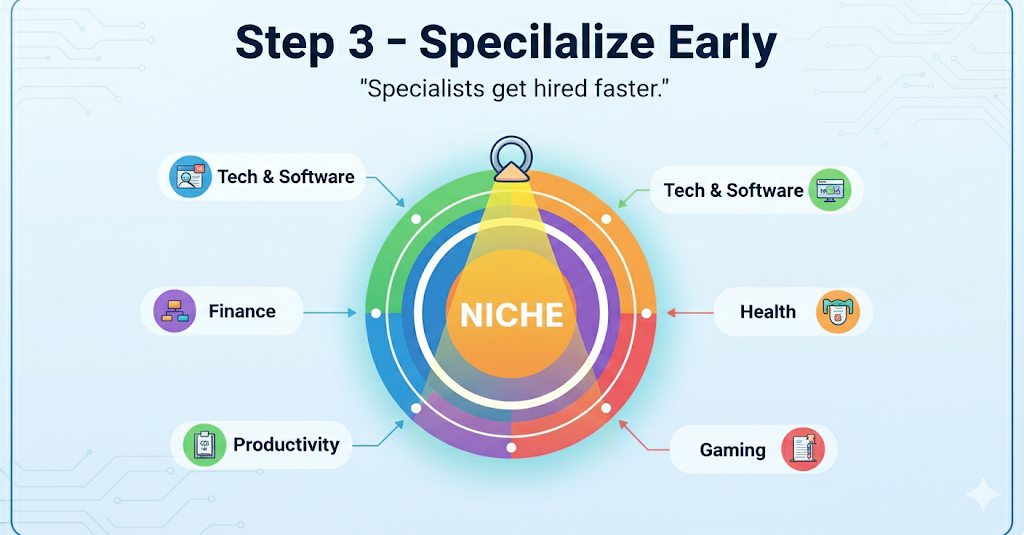
Popular beginner-friendly niches include:
- Technology and software
- Personal finance
- Health and wellness
- Productivity and remote work
- Gaming and gadgets
Pick something you are genuinely curious about. Writing becomes easier when interest is involved.
Step 4: Learn Basic SEO (Even as a Writer)
In 2026, knowing how to start writing online without understanding SEO puts you at a disadvantage. Most online content is published to attract traffic, which means search engine visibility matters.
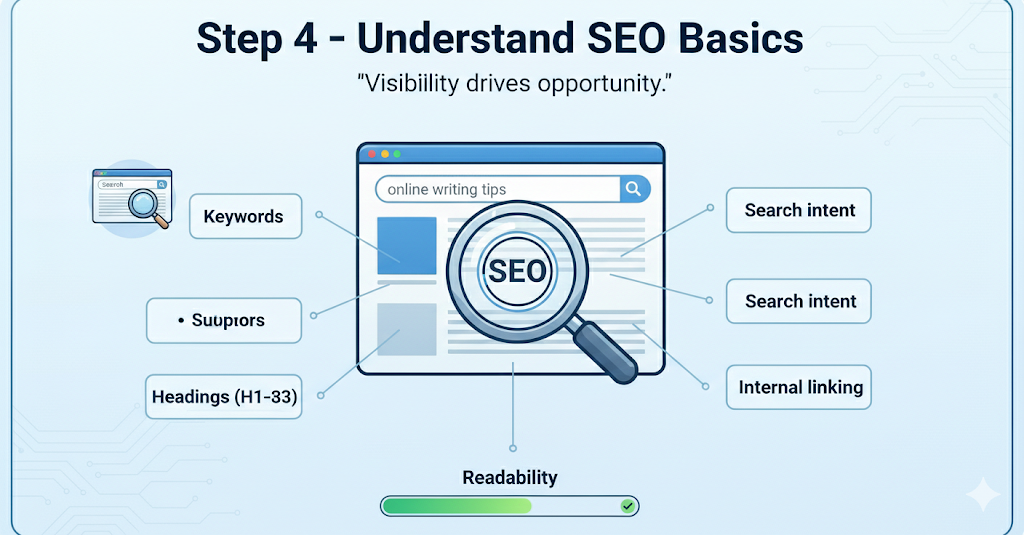
You do not need to become an SEO expert immediately, but you should understand:
- What keywords are
- What search intent means
- How headings structure content
- Why internal linking matters
- How readability impacts ranking
Writers who understand SEO earn more than writers who ignore it. It is that simple.
Step 5: Create Writing Samples (Even Without Clients)
Many beginners get stuck waiting for their first client before writing anything. That is backwards. You should create sample pieces before you ever pitch someone.
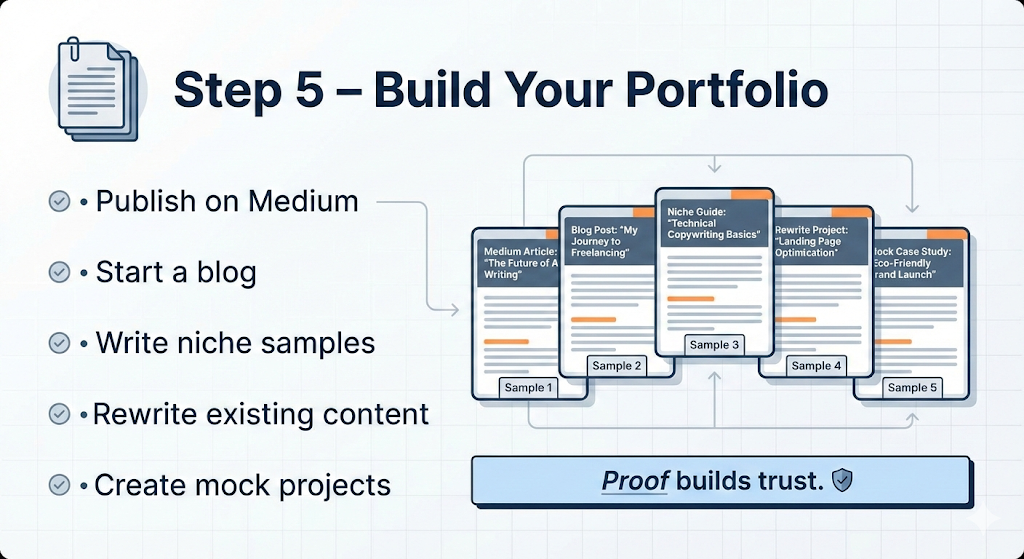
You can:
- Publish articles on Medium
- Start a simple blog
- Write sample posts in your chosen niche
- Rewrite existing articles to improve clarity
- Create mock projects for imaginary clients
Your portfolio does not need to be large. It needs to show structured thinking and clean writing.
Step 6: Start Finding Writing Opportunities
Once you have basic samples, it is time to test the market. There are multiple ways to find writing from home opportunities.
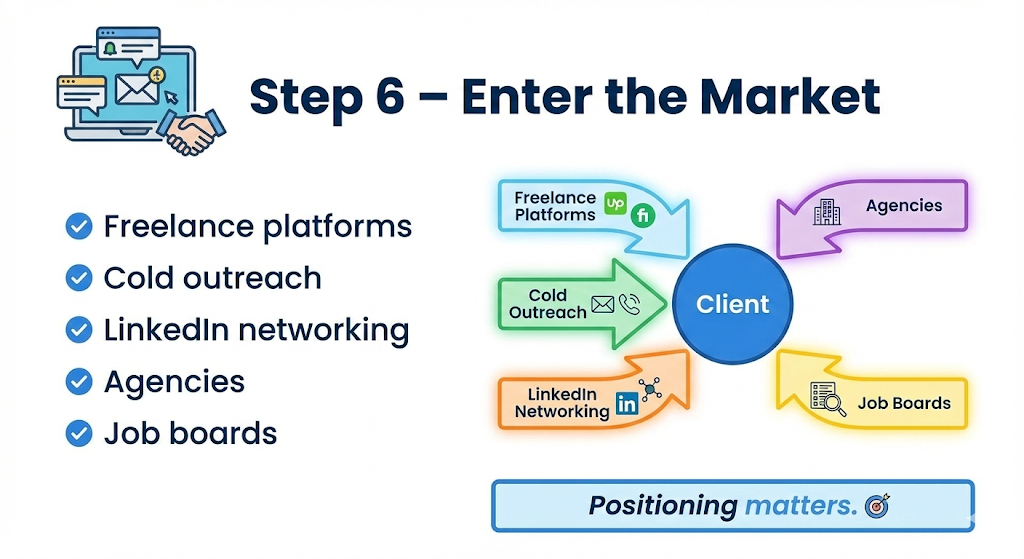
Common starting points include:
- Freelance marketplaces
- Cold pitching startups
- Content agencies
- LinkedIn outreach
- Job boards for remote writers
Do not expect immediate success. Early stages are about learning positioning, improving proposals, and refining your offer.
Step 7: Set Realistic Income Expectations
One dangerous myth about online writing is instant high income. While some writers earn very well, it usually takes time.
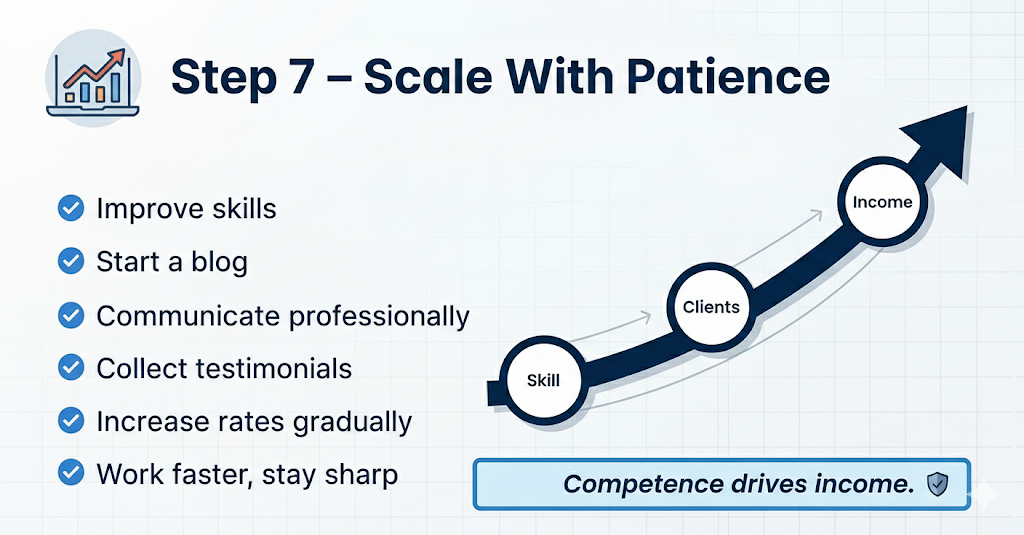
In the beginning, focus more on:
- Skill development
- Client communication
- Building testimonials
- Improving speed without sacrificing quality
Income growth follows competence and positioning.
Tools That Help Beginners Start Writing Online
The right tools will not turn you into a great writer overnight, but they can dramatically shorten your learning curve. When I started writing online, I underestimated how much friction simple tools could remove. The goal is not to stack dozens of apps. It is to build a small, intentional toolkit that supports clarity, editing, research, and organization.
Below are the essential tool categories every beginner should understand, along with examples that are widely used in 2026.
Writing & Drafting Tools
Your primary writing environment matters more than most beginners realize. A clean interface reduces distractions and encourages deeper focus, especially when you are building your writing stamina.
Popular writing platforms include:
- Google Docs for cloud-based drafting and collaboration
- Microsoft Word for structured formatting and professional documents
- Scrivener for long-form projects and book writing
- Ulysses for distraction-free writing on Apple devices
- Notion for combining writing with planning and research
For beginners, Google Docs is usually enough to start. As your workflow becomes more advanced, tools like Scrivener or Notion become more valuable for managing large content projects.
Grammar and Editing Tools
Even strong thinkers need editing support. Beginners often struggle with sentence clarity, punctuation, and word repetition. Grammar tools act as your first layer of quality control before submitting work to clients.
Widely used editing tools include:
- Grammarly for grammar, tone suggestions, and clarity improvements
- ProWritingAid for deeper writing analysis and style reports
- Hemingway Editor for improving readability and reducing complexity
- LanguageTool as an alternative grammar checker
These tools should assist your thinking, not replace it. If a suggestion changes your meaning, trust your judgment. Over time, you will rely on them less as your writing improves naturally.
AI Writing Assistants (Use Strategically)
In 2026, AI tools are part of the writing ecosystem whether we like it or not. The key difference between average and skilled writers is how they use AI. Beginners should treat AI as a brainstorming partner, not a replacement for structured thinking.
Common AI writing tools include:
- ChatGPT for idea generation, outlining, and clarification
- Jasper for marketing-focused content
- Copy.ai for short-form copy
- Writesonic for blog drafts and landing pages
AI is useful for generating outlines, expanding ideas, or overcoming writer’s block. However, your competitive advantage comes from editing, refining, and injecting human insight into the final output.
Keyword Research & SEO Tools
If you want to earn through blog writing or SEO content, understanding keywords is essential. Many beginners ignore this step and write without strategic direction. That often leads to low visibility and limited opportunities.
Helpful keyword tools include:
- Ubersuggest for beginner-friendly keyword insights
- Ahrefs for advanced keyword research and competition analysis
- SEMrush for SEO research and content planning
- Google Keyword Planner for basic keyword volume data
- AnswerThePublic for question-based topic ideas
You do not need expensive tools immediately. Even free keyword tools can help you understand search demand and shape content accordingly.
Plagiarism Checkers
Originality matters, especially when working with clients or publishing under your own brand. Accidental similarity can happen when researching heavily, so it is wise to double-check your work.
Common plagiarism tools include:
- Copyscape for web content checks
- Quetext for detailed similarity reports
- Grammarly Premium which includes plagiarism detection
Using these tools protects your credibility and builds trust with clients.
Research and Note-Taking Tools
Strong writing depends on strong thinking, and strong thinking requires organized research. Beginners often lose ideas or forget useful references because they rely on scattered notes.
Effective research tools include:
- Notion for structured content planning
- Evernote for quick idea capture
- Obsidian for building interconnected knowledge systems
- Google Keep for lightweight note storage
Having a central system for storing ideas, outlines, and references will make you more efficient over time.
Productivity Tools for Writers
Writing from home requires discipline. Without structure, distractions easily take over. Productivity tools can help you build consistency and manage your writing time effectively.
Useful productivity tools include:
- Trello for tracking writing projects
- ClickUp for client task management
- Todoist for daily writing goals
- Freedom for blocking distracting websites
- RescueTime for tracking time usage
You do not need all of these. Choose one project manager and one focus tool, and commit to using them consistently.
File Management and Backup Tools
Losing your work is one of the most painful beginner mistakes. Always use automatic backups and cloud storage from day one.
Reliable storage options include:
- Google Drive for automatic document backup
- Dropbox for cross-device syncing
- OneDrive for Microsoft ecosystem users
Simple backup habits protect months of effort.
Building Your Starter Tool Stack
If you are overwhelmed, start with this simple combination:
- Google Docs for writing
- Grammarly (free version) for editing
- Ubersuggest (free tier) for keyword ideas
- Notion or Trello for organization
- Google Drive for storage
That is enough to begin writing online professionally. You can upgrade tools later as your income grows.
The biggest mistake beginners make is obsessing over tools instead of improving their writing clarity. Tools are accelerators, not substitutes for skill. Focus on thinking clearly, writing consistently, and editing honestly. The right tools will simply make the process smoother.
Common Mistakes Beginners Should Avoid
Understanding what not to do is just as important as knowing what to do.
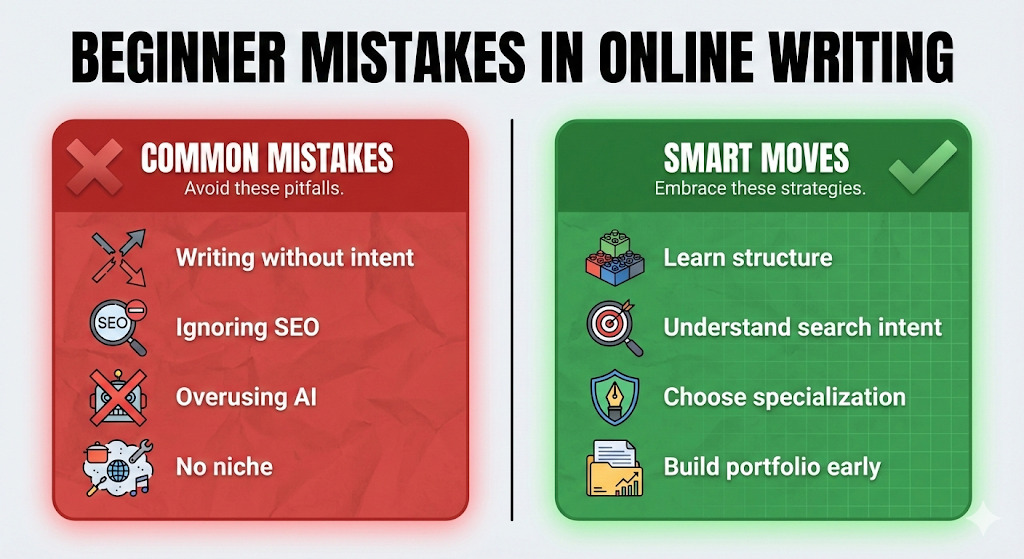
Avoid these common beginner errors:
- Writing without understanding audience intent
- Overusing AI without adding original insight
- Ignoring editing and proofreading
- Undervaluing your work excessively
- Trying to specialize in too many niches at once
Online writing rewards consistency and strategic focus.
Is Online Writing Still Worth It in 2026?
Yes, but only if you approach it seriously. Writing from home is not a get-rich-quick shortcut. It is a skill-based career that requires clarity, practice, and patience.
If you commit to improving your writing structure, understanding SEO basics, choosing a niche, and building real samples, you can build a sustainable online writing path.
The internet is not running out of content demand. It is running out of clear thinkers who can communicate effectively.